

Ideas That Challenge.
Stories That Inspire.
Explore insights on focus, leadership, communication, psychology, and personal growth—drawn from years on stage, behind the scenes, and in everyday life.

Why I Sometimes Balance a Spoon on My Nose (And What It Teaches About Attention)
The Spoon, the Story, and the Secret of Attention
Attention is the most valuable currency in any room. Sometimes it begins with something as simple as a spoon.
Why I occasionally balance a spoon on my nose (and why it actually makes sense).
Yes, it’s true.
At some point during one of my talks, I balance a spoon on my nose.
Before anyone begins quietly Googling “Is this speaker having a breakdown?”, allow me to clarify:
It’s intentional.
And yes, there’s a reason.
A Confession from the Classroom
When I was a kid sitting in school, I often struggled to understand what was being taught.
Not because the teachers were bad. Most of them were wonderful.
But my brain kept asking a question that the lesson plan didn’t always answer:
Why does this matter?
If the answer to that question wasn’t obvious, my attention went wandering. Not maliciously. Just… curiously. Like a golden retriever that spotted a squirrel.
Years later, after thousands of hours on stages speaking to audiences around the country, I’ve become fascinated with the opposite problem:
How do you make ideas stick?
Because information is everywhere.
But attention?
Attention is rare.
The Feynman Principle
One of my intellectual heroes in this quest is the physicist Richard Feynman.
Feynman believed that if you truly understand something, you should be able to explain it so simply that almost anyone could grasp it. No jargon. No intellectual smoke bombs. Just clarity.
It’s a wonderful rule.
It’s also terrifying.
Because the moment you try it, you discover whether you actually understand something… or whether you’ve just been hiding behind complicated language.
That idea completely changed how I think about teaching, speaking, and storytelling.
Why I Don’t Start with Slides
When I step on stage, I don’t begin with slides.
I begin with curiosity.
And sometimes that curiosity begins with a spoon.
Sometimes it’s a lollipop.
Sometimes it’s a pocket watch.
Sometimes it’s something else entirely.
The object itself isn’t the point.
It’s what I call a mystery device.
A small, strange signal to the human brain that says:
Pay attention. Something interesting is about to happen.
And when attention locks in, something magical happens.
People lean forward.
The Oldest Teaching Tools on Earth
From there we build the lesson using the oldest tools humans have ever used to pass knowledge from one generation to the next:
Symbolism
Metaphor
Analogy
Story
Long before PowerPoint existed, this is how humans taught each other.
The brain loves patterns and pictures. Give it a story, and suddenly complex ideas become memorable.
Which is why when an audience laughs, wonders, and leans forward… something important happens.
They remember.
The Morning After Test
My goal isn’t just to entertain people in the moment.
My goal is what I call the morning-after test.
If someone wakes up the next morning thinking,
“Hmm… I might see things a little differently now.”
Then the talk worked.
Because the story did its job.
The Real Job of a Speaker
In the end, professional speakers aren’t really speakers.
They’re storytellers.
And the most important story isn’t the one happening on stage.
It’s the one happening in your head.
The narrative you’re telling yourself about what’s possible. About who you are. About what you’re capable of becoming.
And every story begins in the same place.
With where you choose to place your attention.
Which brings us back to the spoon.
It’s not about the spoon.
It’s about focus.
And sometimes the best way to teach people about attention…
is to give them something strange enough that they can’t help but pay it.
What This Means for Your Audience
If you’ve ever sat through a presentation where the speaker clicked through 87 slides and you remembered exactly none of them the next morning… you already understand the problem.
Information alone doesn’t change people.
Attention does.
That’s why the most effective keynote speakers use storytelling, curiosity, humor, and memorable moments to help ideas stick long after the event ends.
Sometimes that moment begins with a simple mystery object.
Sometimes it’s a spoon.
But the real goal is always the same: helping people see something familiar in a completely new way.
Looking for a Keynote Speaker Who Captures Attention?
Arthur Fratelli-Silknitter, known on stage as The Amazing Arthur, is a keynote speaker, entertainer, and storyteller who blends psychology, humor, illusion, and audience interaction to create presentations people actually remember.
His programs focus on:
• Attention and focus in a distracted world
• The psychology of perception and decision-making
• How curiosity and storytelling unlock engagement
• Turning ideas into memorable experiences
Arthur has presented for conferences, corporations, schools, and leadership events across the country.
And yes…
Sometimes it starts with a spoon.
👉 Learn more or book Arthur for your event:
https://www.amazingarthur.com
Arthur Fratelli-Silknitter
The Amazing Arthur
Professional Speaker | Mentalist | Hypnotist
#BeAmazing
AMAZING ARTHUR
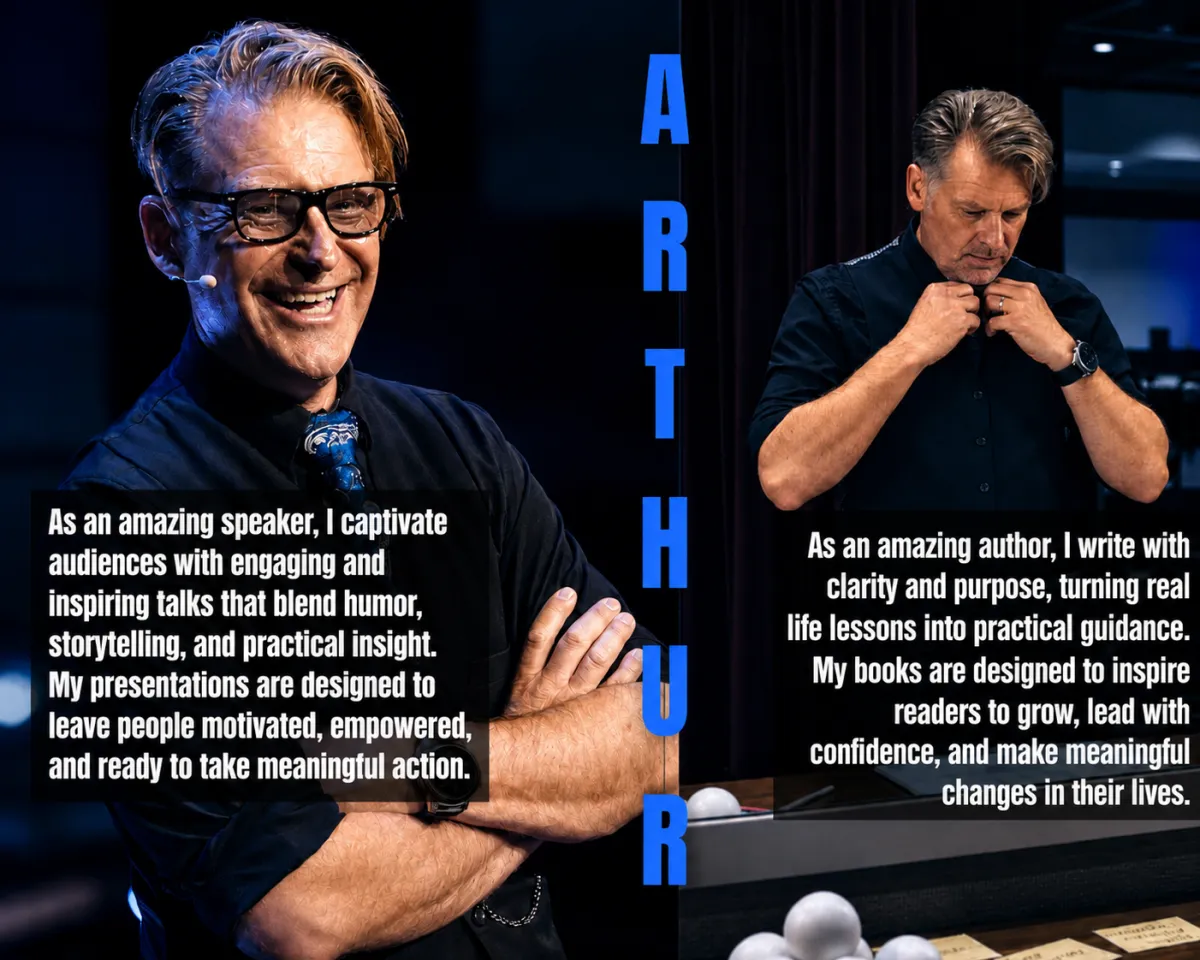
Not Just a Corporate Speaker, But an Author Inspiring Meaningful Change
The Amazing Arthur joined us for our annual office holiday party and we couldn't be more impressed and happier with the entertainment he provided. From the initial booking to communication leading up to the event through to the very end of the evening, Arthur was professional, kind, organized and most importantly, entertaining. He had the entire crowd laughing for an hour straight! Thanks for sharing your talents with our group, we thoroughly enjoyed the show and appreciate you!

Hired for an event and what a professional and amazing performer. He was on time for our event, gave an "amazing" performance, and we couldn't believe how reasonable his rate was for such a great show. Hands down the best entertainer in Omaha and would not hesitate to hire him again. Easy 5 Stars!

We booked Arthur for our Corporate Christmas party. He kept a room of 450 thoroughly entertained for the complete show. To make every demographic watch, laugh, pay attention and entertain is truly Amazing! If you are looking for entertainment for your next corporate event. Yeah, get this guy. Worry about other party details, and definitely not the entertainment, when you have Arthur booked.

Laugh, Learn, and Be Inspired with me.
Need your audience awake without making the coffee stronger?
Whether you’re booking a comedy show, a motivational talk, or a special event, Arthur delivers unforgettable moments filled with laughter and insight.