

Ideas That Challenge.
Stories That Inspire.
Explore insights on focus, leadership, communication, psychology, and personal growth—drawn from years on stage, behind the scenes, and in everyday life.
Nebraska Keynote Speaker on Failure, Focus & Flow | Amazing Arthur
What I’m Bringing to the Stage This October: Failure, Focus, Flow and a Few Impossible Things
October is shaping up to be a busy month.
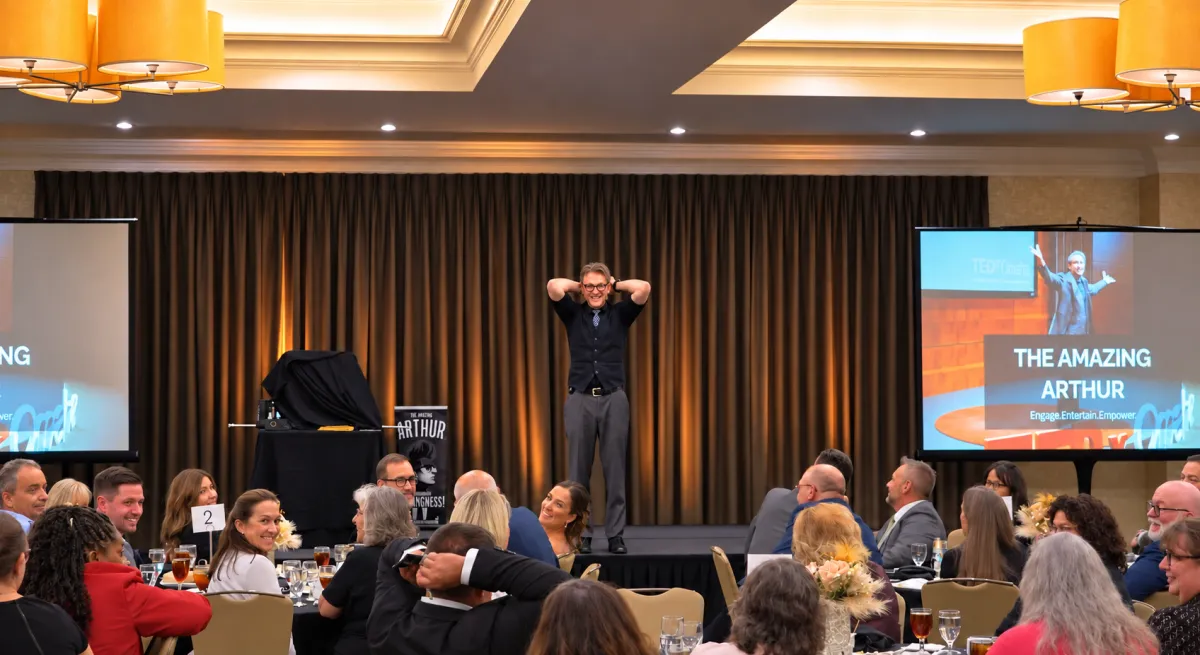
I’ll be speaking at conferences, organizational events and private events throughout the month, including an upcoming program for Nebraska Cancer Specialists.
And I can’t wait.
Not simply because I love being onstage.
I love what I get to talk about.
A big part of my work is built around five ideas:
Failure → Focus → Flow → Fulfillment → Foresight.
Together, they form what I call The System.
It is a way of looking at what happens when we decide to get better at something.
Not just thinking about getting better.
Not reading another book about getting better.
Actually choosing something difficult, stepping into that uncomfortable space where we don’t quite know what we’re doing, and staying there long enough to change.
That is what I want to talk about with leaders this fall.
And I don’t just want to talk about it.
I want to demonstrate it.
## People Listen Best While Watching
That has become one of the central ideas behind everything I do onstage:
People listen best while watching.
There are plenty of ways to explain focus.
I can put the word FOCUS on a PowerPoint slide.
I can give you five bullet points.
I can show you a stock photo of somebody climbing a mountain while wearing a business suit.
Or I can actually show you what years of focus can produce.
I prefer the latter.
That is why my keynotes incorporate skills I’ve spent years learning: magic, mentalism, juggling, psychology, hypnosis, comedy and other things that probably seemed like perfectly reasonable uses of my time when I started learning them.
They aren't interruptions in the keynote.
They are the keynote.
Each one gives me another way to demonstrate what happens when failure becomes focus, focus develops into skill, and skill eventually gives us access to flow.
## I’m Still Learning
One of the things I never want to become is somebody who has been doing the same presentation for 25 years and simply changes the copyright date.
I want to keep getting better.
So I’m constantly reading, researching, practicing and looking for things I don’t know yet.
That means books.
Lots of books.
It means old publications, forgotten ideas, obscure references, notes, manuscripts and material created long before I was born.
Sometimes I go looking because I need a particular kind of routine.
Sometimes there is a problem in the show I’m trying to solve.
Sometimes I have an idea and need to figure out whether somebody else has explored it before.
And sometimes I find something completely unexpected.
That happened again this year.
One of the new thought-prediction pieces I’m developing began with an idea I discovered in an obscure mentalism publication from 1935.
1935.
Think about that.
An idea can sit there for more than 90 years and suddenly make you stop and think:
What could I do with this?
I love that.
I love finding an idea from another era, studying it, understanding what makes it interesting, and then exploring how it could become something completely different in my hands and for a modern audience.
I don't think of that as simply collecting tricks.
It is studying an art.
There is history behind this stuff.
There are generations of performers who solved problems, discovered principles, tried things that worked, tried things that didn't work and left behind ideas for the next person to explore.
I get enormous enjoyment out of diving into that world.
And then I get to bring some of what I discover onto a stage.
## And Then There’s the Rubik’s Cube
I’m also adding more work with a Rubik’s Cube this year.
A cube is almost a perfect physical representation of what I talk about.
Hand a scrambled Rubik's Cube to someone who doesn't know how to solve one and it looks like chaos.
You turn one side and mess up another.
You fix something and then destroy it.
You get frustrated.
You start over.
You wonder whether the person who invented the thing had some sort of personal vendetta against you.
But then you start learning.
You recognize patterns.
You understand relationships.
You learn what certain movements do.
The thing itself hasn't changed.
You have.
Something that initially looked like chaos begins to have structure.
That's one of my favorite ideas about learning any art, craft, discipline or skill.
We are constantly taking things that feel like chaos and slowly turning them into order.
## Find Something You’re Getting Better At
I believe everybody needs something in their life they are getting better at.
Not something they are already good at.
Something they are getting better at.
There's an important difference.
It might be playing an instrument.
Painting.
Woodworking.
Martial arts.
Writing.
Cooking.
Running.
Learning a language.
Solving a Rubik's Cube.
Magic.
Juggling.
It almost doesn't matter what the thing is.
What matters is that there is some place in your life where you regularly encounter the words:
I don't know how to do this.
Because that's where things get interesting.
You attempt it.
You fail.
Then you begin paying attention.
Why didn't that work?
What am I missing?
What does someone who can do this understand that I don't understand yet?
Now failure is doing something useful.
It is giving you information.
And information gives you something to focus on.
## Failure → Focus → Flow
That is where The System begins.
Failure isn't something I talk about because it sounds motivational.
I've failed at nearly everything you see me do onstage.
I have dropped the juggling clubs.
Missed things.
Forgotten things.
Built routines that went absolutely nowhere.
Practiced things for hours only to discover that my brilliant idea was considerably less brilliant once another human being saw it.
That is part of learning.
Failure shows you the gap between what you intended to happen and what actually happened.
Then comes focus.
You isolate the problem.
You practice.
You make another attempt.
You make adjustments.
Eventually something interesting begins to happen.
Things that used to require enormous concentration become easier.
Movements become automatic.
Patterns become recognizable.
Your abilities begin catching up to the challenge.
And every once in a while you find yourself completely absorbed in what you are doing.
Flow.
But I don't think the process stops at flow.
## What Comes After Flow?
I think flow leads to Fulfillment.
There is something deeply satisfying about becoming capable of doing something you once couldn't do.
You have changed yourself.
Then comes something I find even more interesting:
Foresight.
Once you've gone through this process enough times, you begin looking at the future differently.
You have evidence.
You know what it feels like to stand on one side of a skill and think, "I could never do that."
And you know what it feels like later when you can.
That changes the next challenge.
You stop treating every current limitation as permanent.
You begin asking a much better question:
What could I learn next?
That is important for individuals.
I think it's especially important for leaders.
Organizations change.
Technology changes.
Markets change.
Teams change.
Problems arrive for which there is no convenient instruction manual.
Being comfortable with learning, experimenting, failing, adjusting and learning again isn't just a nice philosophical idea.
It's part of leadership.
## Why I’m So Happy on Stage
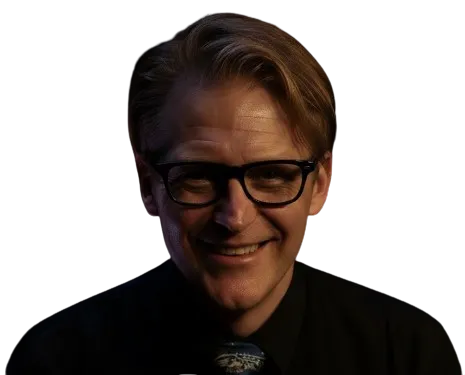
People occasionally comment on how happy I look when I'm onstage.
There is a simple reason.
I am.
I love this stuff.
I love magic.
I love mentalism.
I love psychology and human behavior.
I love juggling.
I love learning a new physical skill.
I love opening an old book and finding an idea that sends me down a rabbit hole for three hours.
I love discovering something written nearly a century ago and wondering what it might become today.
I love practicing something that seems impossible until it becomes slightly less impossible.
Then possible.
Then eventually something I can share with an audience.
That excitement isn't something I have to manufacture before walking onto a stage.
I'm getting to talk about something I'm genuinely passionate about.
More importantly, I'm getting to talk about what happens when any of us finds an art, craft, discipline or skill that makes us want to keep learning.
You can't immerse yourself in something you love without being inspired by it.
You can't keep learning without being changed by the process.
And when I walk onto a stage to talk to leaders about failure, focus and flow, I'm not explaining something I observe from a distance.
I'm standing there surrounded by evidence of it.
The mentalism is evidence.
The Rubik's Cube is evidence.
The juggling is evidence.
The stories are evidence.
Every skill carries the history of all the times I couldn't do it.
## October
So that's what I'm looking forward to this October.
New audiences.
New conferences.
Private events.
Nebraska Cancer Specialists.
New material.
New ideas.
A few things I've been practicing for months.
At least one idea that has been waiting since 1935 for me to find it.
And another opportunity to talk about something I increasingly believe:
Find something worth getting better at.
Choose an art, craft, discipline or skill.
Be willing to be bad at it.
Pay attention to what failure is trying to teach you.
Focus.
Stay with it long enough to discover flow.
Enjoy the fulfillment that comes with becoming capable.
And then use that experience to develop the foresight to ask:
What comes next?
Failure → Focus → Flow → Fulfillment → Foresight.
That's The System.
And I can't wait to bring it to the stage this October.
Let's get out there and Be Amazing!
Laugh, Learn, and Be Inspired with me.
Need your audience awake without making the coffee stronger?
Whether you’re booking a comedy show, a motivational talk, or a special event, Arthur delivers unforgettable moments filled with laughter and insight.