

Ideas That Challenge.
Stories That Inspire.
Explore insights on focus, leadership, communication, psychology, and personal growth—drawn from years on stage, behind the scenes, and in everyday life.
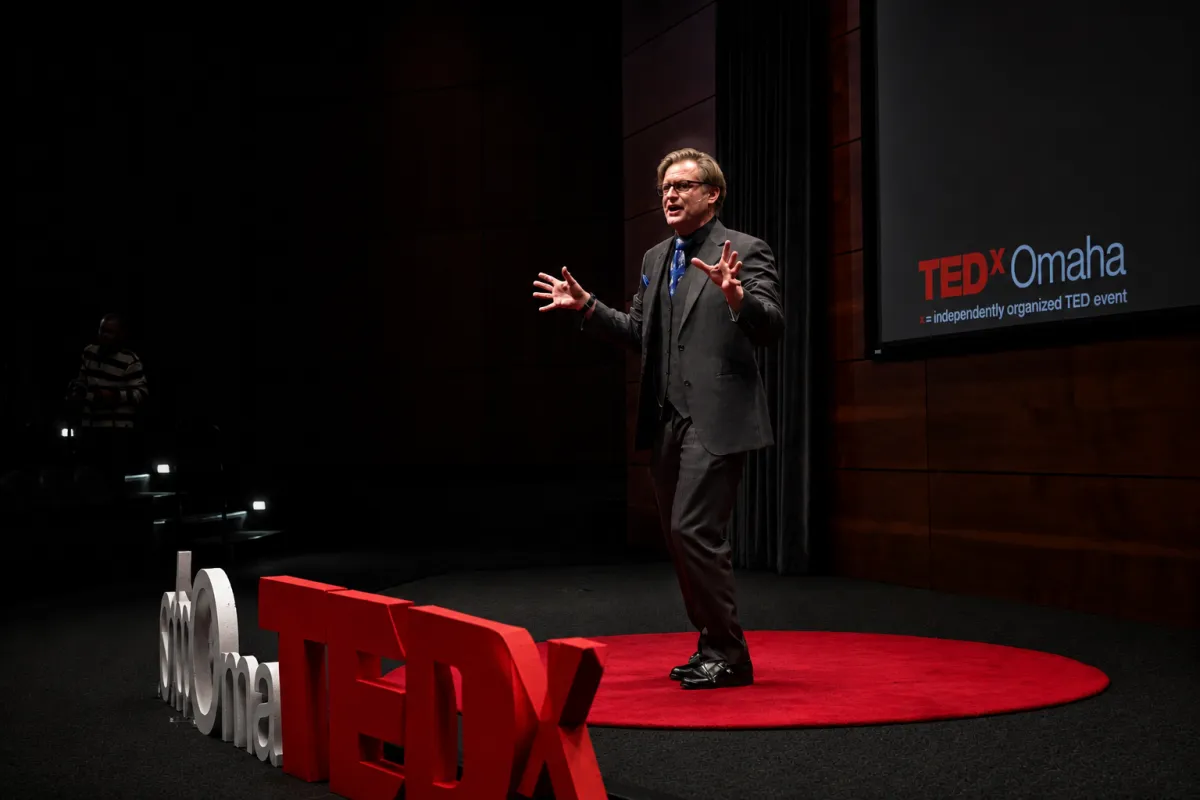
Nebraska Keynote Speaker | The Amazing Arthur
Looking for a Keynote Speaker in Nebraska? Why My Keynotes Don’t Look Like Keynotes
I have nothing against PowerPoint.
PowerPoint has never personally wronged me.
But if you bring me in to speak at your conference, corporate meeting, association event, leadership retreat, or company gathering, I’m probably not going to spend an hour standing beside a screen reading bullet points.
Because I believe something very simple:
People listen best while watching.
And I’ve spent most of my life learning some very strange things for them to watch.
I’m a professional speaker, mentalist, magician, hypnotist, comedian, juggler, author, former teacher, and lifelong student of skills that initially appeared impossible.
That last part is important.
Because the tricks, demonstrations, stories, and visual metaphors in my keynote aren’t decoration around the presentation.
They are the presentation.
I Went Looking for Impossible Things
For as long as I can remember, I’ve been fascinated by things I couldn’t do.
How does somebody read another person’s thoughts?
How does a magician make something impossible happen right in front of you?
How does someone keep three, four, or five objects in the air?
How does a martial artist develop that kind of focus?
How does a hypnotist direct somebody’s attention so completely?
How does somebody throw a playing card accurately?
Manipulate a yo-yo?
Balance something that shouldn’t balance?
Make a spinning top do something a spinning top shouldn’t be able to do?
I’ve spent decades going down those rabbit holes.
Some went much deeper than expected.
But here is the interesting part:
Eventually I realized the real lesson wasn’t the trick.
The real lesson was the person I had to become in order to learn the trick.
That is where my keynote came from.
Let Me Show You What I Mean With a Spinning Top
Remember spinning tops?
As a kid, a top is fascinating.
You pull the string, it starts spinning, and for some reason this is absolute sorcery.
As an adult?
It’s a top.
Congratulations. It spins.
But when I was learning to manipulate tops, I became obsessed with a question:
How do I make it go somewhere?
A normal top has plenty of energy.
It can spin incredibly fast.
But it doesn’t really have a destination.
It just spins.
That started to feel awfully familiar.
Because people can do exactly the same thing.
We can be incredibly busy.
Emails.
Meetings.
Phone calls.
Projects.
Deadlines.
Notifications.
More meetings about the meetings.
We can burn enormous amounts of energy without actually moving toward the thing we say matters.
During my keynote, I take out an almost invisible line.
Most people in the audience can barely see it.
I stretch it between two points.
Then I launch the top.
When I get it positioned correctly, the spinning top catches that line and suddenly something changes.
The top starts moving forward.
Same top.
Same energy.
Different result.
It had energy before.
Now it has direction.
And eventually I can send that spinning top traveling down the line and onto the table, still spinning.
It is one of my favorite moments in the presentation because I don’t have to put a slide behind me that says:
GOALS ARE IMPORTANT.
They just watched it happen.
The invisible line becomes the goal.
The path.
The system.
The thing most people looking from the outside may never see.
That is what a good goal often looks like.
Other people may not be able to see the path you see.
They don’t know what you’re building.
They don’t know why you’re practicing.
They may not understand why you keep working at something that hasn’t paid off yet.
But once there is a destination and a system connecting you to it, all that energy finally has somewhere to go.
And suddenly the top isn’t merely spinning.
It is traveling.
That Is What I Mean by a Visual Keynote
I can stand onstage and tell an audience that failure is necessary.
Or I can let them watch me drop something I spent years learning to catch.
I can talk about focus.
Or I can demonstrate what extraordinary concentration actually looks like.
I can talk about perception.
Or I can apparently read someone’s thoughts and then ask the audience to consider how much information is constantly passing right in front of us unnoticed.
I can talk about choices.
Or I can place those choices into someone’s hands.
I can talk about reframing a problem.
Or I can create an impossible situation onstage and let the audience experience the moment when their assumptions about it change.
Those experiences become metaphors.
And metaphors stick.
A month later, I don’t expect someone to remember slide number 37.
But they may remember the top.
They may remember the impossible prediction.
They may remember the moment someone in the audience thought of something they couldn't possibly believe I would know.
They remember the story.
And attached to that story is the idea.
The Tricks Aren’t the Point
This is one of the biggest differences between my keynote and a traditional magic or mentalism show.
I love performing.
I love fooling people.
There is something wonderful about hearing several hundred adults simultaneously make that particular noise people make when their brains have temporarily stopped cooperating.
But I’m not bringing these things onstage merely to say:
Look what I can do.
I’m much more interested in:
Look what learning to do this taught me.
Every difficult skill has a price of admission.
You fail.
You get frustrated.
You try the wrong approach.
You become convinced the person teaching it left out an important step.
You quit for a while.
You come back.
You notice something you missed before.
You adjust.
You practice.
Eventually, something that once looked impossible becomes something you can do without thinking.
That process fascinates me.
Because that is not only how you learn magic.
It is how you build almost anything.
A career.
A business.
A relationship.
A skill.
A stronger team.
A better habit.
A different life.
From Failure to Focus
That journey is the foundation of The System I teach:
Failure → Focus → Flow → Fulfillment → Foresight
Failure gives us information.
Focus determines what deserves our attention.
Repeated focused action begins creating flow.
Progress toward meaningful work creates fulfillment.
And once we understand that process, foresight helps us deliberately decide what comes next.
The System isn’t about waiting until you feel motivated.
It is about creating conditions that make forward movement more likely.
That spinning top is a perfect example.
You don’t need more energy if all your energy is already being spent spinning in place.
Sometimes you need a line.
A direction.
A system.
Your Brain Is Looking for Something. Give It Better Instructions.
I also talk about attention because attention may be one of the most valuable resources we have.
Your brain cannot consciously process everything happening around you.
It has to select.
One part of the machinery involved in alertness and attention is the reticular activating system, or RAS.
I sometimes use it as a doorway into talking about selective attention.
Think about buying a particular kind of car.
Suddenly you see that car everywhere.
Those cars did not magically appear overnight.
They were already there.
What changed was what your attention considered important.
That becomes a powerful question for a person, a leader, or an organization:
What are you training yourself to notice?
Problems?
Opportunities?
Evidence that something won’t work?
Evidence that it might?
The person who has already decided there is no solution often stops searching.
The person who asks a better question starts noticing different information.
That doesn’t mean positive thinking magically changes reality.
It means focus changes what we notice, what we attempt, what we practice, and ultimately what we become capable of doing.
I know that because I’ve spent a lifetime looking at impossible things and asking:
How could I learn to do that?
Mentalism Makes the Conversation Even More Interesting
Then we get into the strange stuff.
Thoughts.
Decisions.
Predictions.
Influence.
Memory.
Perception.
Attention.
I use mentalism because there are few things more compelling than watching another human being apparently know something they could not possibly know.
The room changes instantly.
People lean forward.
They start watching differently.
They start questioning their assumptions.
And now we have somewhere interesting to go.
What did you notice?
What did you miss?
What made you choose what you chose?
How quickly do we construct explanations for things we don’t completely understand?
How much of what we experience is determined not simply by what is in front of us, but by what we are paying attention to?
Now the demonstration has become a conversation about thinking.
That is where entertainment becomes useful.
I’m Not Trying to Make a Speech More Entertaining
This distinction matters.
I didn’t create a speech and then decide:
“You know what this needs? A juggling trick.”
The performance disciplines came first.
Magic.
Mentalism.
Comedy.
Hypnosis.
Juggling.
Martial arts.
Teaching.
Storytelling.
Decades of learning weird things, failing at them, studying the people who mastered them, and figuring out what those experiences had in common.
The keynote grew out of that.
So the visual demonstrations and the message aren’t two separate things awkwardly duct-taped together.
The demonstration is the metaphor.
The story of learning it is part of the lesson.
And the audience gets to experience the idea before I ever explain it.
That is why I describe myself as an interactive speaker.
The audience isn’t there to watch me deliver information.
They are part of what happens.
Why This Works for Corporate Events
Corporate audiences are smart.
They also know when they are being presented at.
By the time I walk onstage at a conference, annual meeting, leadership program, association event, or company gathering, many people in that room have already listened to hours of information.
That doesn’t mean they have an attention problem.
It may mean we have an attention-design problem.
So I build presentations around changes of state.
Listen.
Laugh.
Watch.
Participate.
Wonder.
Think.
Experience.
Reflect.
Then we move again.
Comedy creates connection.
Mentalism creates curiosity.
Physical skills create visual metaphors.
Stories create context.
The System gives everything a framework.
And audience participation turns a room full of individuals into people who have experienced something together.
That is the keynote I want to give.
A Nebraska Keynote Speaker Who Travels Everywhere
I’m based in the Omaha area, so I regularly speak and perform for corporate events, conferences, associations, schools, and organizations throughout Omaha, Lincoln, Nebraska, and the Midwest.
I also travel nationally.
So if you found this article because you were searching for a Nebraska keynote speaker, Omaha keynote speaker, corporate keynote speaker, motivational speaker, mentalist, or interactive corporate speaker, yes, those words describe what I do.
But they don’t completely explain it.
I would rather show you.
Because, after all:
People listen best while watching.
And if I do my job correctly, your audience won’t simply leave saying they heard a good speech.
They’ll leave talking about the top.
The thought somebody was thinking.
The thing that appeared impossible.
The moment the whole room laughed.
And, somewhere underneath all of that, they may begin looking at their own goals, attention, failures, abilities, and possibilities a little differently.
That is what I’m trying to create.
Not another presentation.
An experience that gives the idea somewhere to live.
If you’re planning a corporate conference, association meeting, leadership event, annual meeting, employee program, or company gathering in Omaha, Lincoln, anywhere in Nebraska, or anywhere else you’d like me to show up with a suitcase full of unusual objects, let’s talk.
Arthur Fratelli-Silknitter
The Amazing Arthur
Keynote Speaker • Mentalist • Author • Professional Demonstrator of Things That Seemed Like a Good Idea to Learn at the Time
Laugh, Learn, and Be Inspired with me.
Need your audience awake without making the coffee stronger?
Whether you’re booking a comedy show, a motivational talk, or a special event, Arthur delivers unforgettable moments filled with laughter and insight.